

.jpg)

The World’s First Kidney Transplant
Pioneering Efforts
The need to replace failing organs had been pursued by humankind for a long time, but it was not until the 20th century that kidney transplantation was performed in humans. The first human-to-human kidney transplant was carried out in 1933 in the Soviet Union, but it failed because the recipient’s body rejected the transplanted kidney. Later attempts in France in 1953 prolonged the function of the transplanted kidney, but they still could not overcome the immune barrier.
The First Successful Kidney Transplant
On December 23, 1954, in Boston, United States, Dr. Joseph E. Murray and his surgical team successfully performed the first kidney transplant between two identical twin brothers. Because the two individuals had the same genetic makeup, the risk of rejection was almost zero. The transplanted kidney functioned well, and the recipient lived for many years after the surgery.
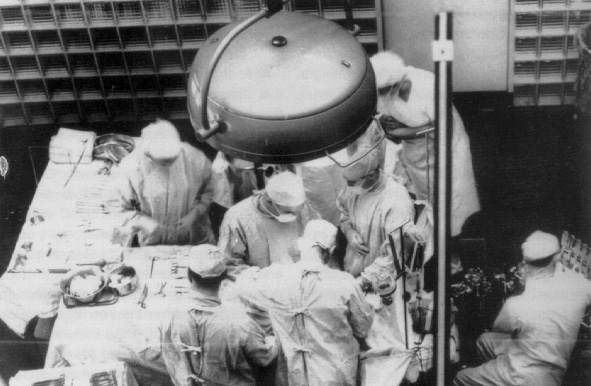
This achievement marked the world’s first successful kidney transplant, proving that organ transplantation between humans was possible.
Significance for Medicine
The success of the 1954 procedure opened a new era for organ transplantation and modern surgery. From this milestone, research into immunosuppressive drugs began to develop, expanding the possibility of kidney transplantation between individuals who were not genetically related.
Today, kidney transplantation is the preferred treatment method for improving the quality of life of patients with chronic kidney failure. It continues to advance through techniques involving living donors, deceased donors, and even the future possibility of artificial kidney transplantation.
Educational Value for Medical Training
The story of the first successful kidney transplant reminds medical students and healthcare professionals that medical progress is a journey of perseverance, courage, and humanity. It is a clear demonstration of the power of science combined with faith in the value of life, paving the way for many other organ transplantation techniques, including liver, heart, lung, and pancreas transplantation.


Other Posts