

.jpg)
Anesthetic
Anesthetics (Invented in 1846):
Since ancient times, countless methods of anesthesia had been tested. However, in 1846, a dentist named William T. G. Morton was the first to demonstrate the use of ether anesthesia in surgery. This event marked the beginning of modern anesthesia, allowing patients to receive treatment without pain.
Before the discovery of general anesthesia in the mid-19th century, surgery was regarded only as a last-resort and highly risky treatment. During operations, patients remained conscious and received no pain relief. They endured unimaginable suffering and faced many life-threatening risks.
By 1846, one of humanity’s greatest fears—the pain of surgery—was officially overcome. The anesthetic agents used at that time included gases, masks, and intravenous injections, which were discovered and developed by several outstanding physicians over the following two centuries.
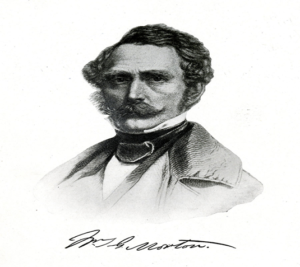
Among all the figures associated with the discovery of anesthetics, the most prominent name in laying the foundation for modern anesthesia is William T. G. Morton (1819–1868), a dentist and physician from Boston, United States. At that time, he was searching for a substance more effective than nitrous oxide, which dentists were using.
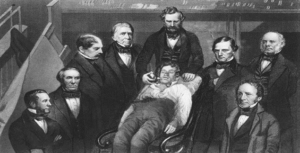
On October 16, 1846, William T. G. Morton and the renowned surgeon John Collins Warren (1778–1856) of Massachusetts General Hospital made medical history with the first successful surgery performed under ether anesthesia.
Morton used sulfuric ether to anesthetize a man who needed surgery to remove a vascular tumor from his neck. The tumor, located on the left side of the patient’s jaw, was successfully removed. Throughout the procedure, the patient appeared not to move or cry out in pain. This greatly astonished the surgical team and the observers present.
William T. G. Morton called his anesthetic “Letheon,” named after the River Lethe in Greek mythology. The waters of this river were believed to erase painful memories.
Before that, he purchased ether from a local chemist and exposed his pets to ether vapor. After confirming its safety, he tested it on his dental patients. Soon afterward, many people suffering from toothache paid large sums of money to receive dental treatment at his clinic.
Morton was pleased with his success, but he quickly realized that “Letheon” could be used for far more than tooth extraction. In 1844, William T. G. Morton attended a lecture by Harvard chemistry professor Charles Jackson on how the organic solvent sulfuric ether could cause a person to become unconscious or even insensible to pain.
Morton experimented with the substance and succeeded, laying the foundation for modern ether anesthesia. William T. G. Morton demonstrated to the world that ether, when inhaled in an appropriate dose, could safely and effectively produce general anesthesia through the respiratory route.
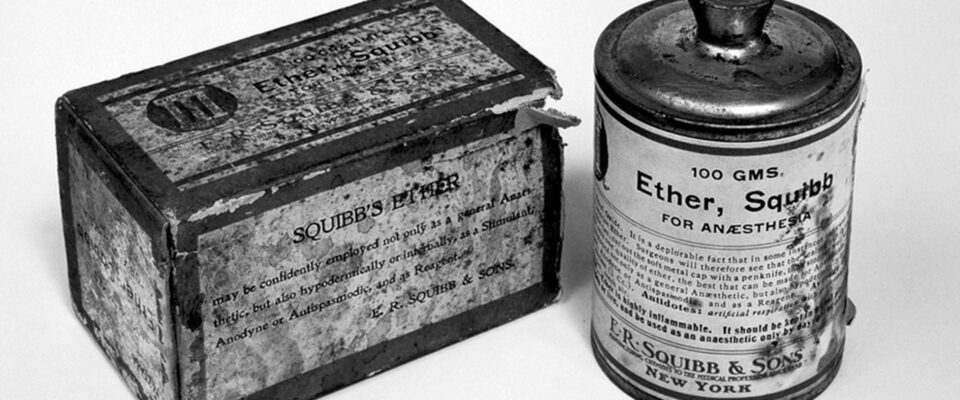
For more than 100 years, ether anesthesia was considered safe, easy to use, and the standard general anesthetic. Until the 1960s, fluorinated hydrocarbon anesthetics such as halothane, enflurane, isoflurane, and sevoflurane became widely used. These newer anesthetics helped reduce nausea, vomiting, and pain. However, they were expensive to produce and had some side effects. They were used mainly in developed countries under strict medical procedures.
Today, physicians have replaced ether with much safer and more effective anesthetic compounds, such as sevoflurane and isoflurane. Because ether is highly flammable, surgeons in the past could not use it together with electrocautery during medical procedures.
The modern process of general anesthesia has now been refined to such an extent that it has become one of the safest procedures among major routine medical interventions. The rate of patient death due to complications from anesthetic drugs is extremely low, at around 1 in 300,000. However, this rate may vary among different countries and under different conditions.


Other Posts