

.jpg)
Ebers Papyrus – A Heritage of Ancient Medicine
1. Introduction
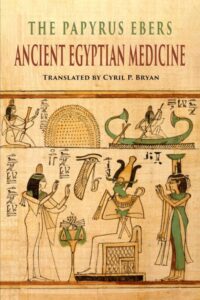
The Ebers Papyrus is an ancient Egyptian papyrus scroll that records medical knowledge and medicinal substances. It is one of the most complete surviving medical texts, estimated to have been copied around 1550 BC. The Ebers Papyrus is currently preserved in the Leipzig University Library in Germany.
2. Discovery, Origin, and Preservation
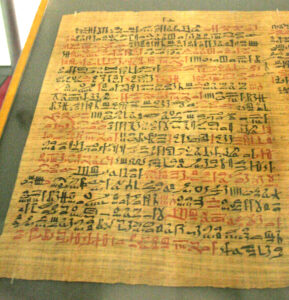
This papyrus scroll is believed to have been found in the Thebes region, near the Assasif tomb area, beside a mummy. The German Egyptologist Georg Ebers purchased it in 1873 in Luxor and brought it to Leipzig. The scroll is about 20 meters long and contains more than 100 columns of text. Although it has been damaged over time, the surviving manuscript remains a valuable source of information on ancient medicine.
3. Content and Structure
The Ebers Papyrus contains more than 800 remedies and detailed records of various diseases, ranging from digestive disorders, dermatological conditions, parasites, and women’s diseases to cardiovascular and mental disorders. These descriptions combine practical medicine with spiritual beliefs, reflecting the idea that illness was caused by an imbalance in the body’s system of “channels” or “vessels.”
Some interesting examples include the use of pomegranate root as a treatment for worms, mixing honey with medicinal ingredients to treat eye pain, and describing the heart as the center of the vascular system connected to the limbs.
4. Historical and Medical Significance
The Ebers Papyrus is of great value in studying the development of human medicine. It shows the combination of practical observation and spiritual elements in treatment, while also revealing early human understanding of the structure and function of the body.
The ideas found in the Ebers Papyrus are considered an early foundation for later theories of physiology and blood vessels in ancient Greek medicine. Some of the remedies recorded in this text have also contributed to research into the origins of modern herbal medicine.
5. Applications in Education and Museums
The Ebers Papyrus is not only valuable for research but also serves as an important educational resource in medical history. It helps learners better understand the historical development of medicine, fosters appreciation for ancient knowledge, and can be used in exhibitions, displays, or teaching activities in museums and medical schools.
6. Conclusion
With its historical, scientific, and cultural value, the Ebers Papyrus stands as evidence of the early beginnings of human medicine. It allows us to look back on humanity’s long journey in exploring the human body and healing disease.


Other Posts