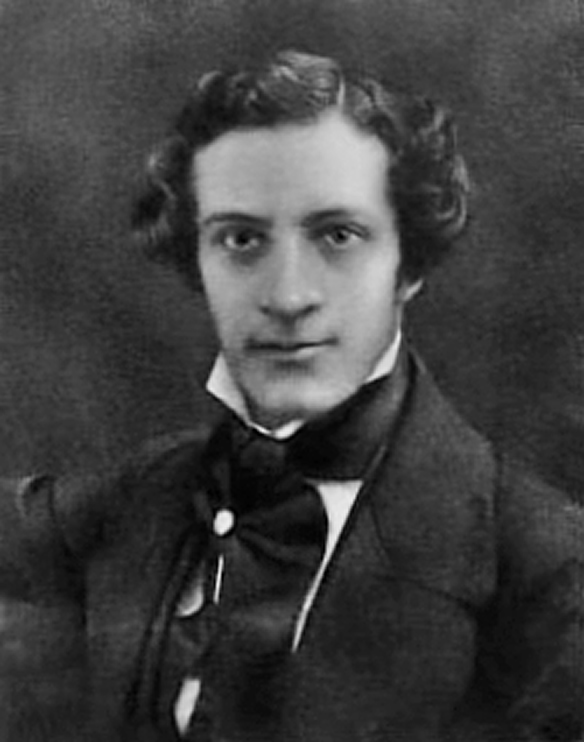


.jpg)
Wilhelm Wundt: The Founder of the Era of Scientific Psychology
In the history of human thought, the transition of a field from speculative philosophy to an empirical science requires revolutionary breakthroughs. For Psychology, that turning point bears the name of Wilhelm Wundt (1832–1920)—a German physician, physiologist, and philosopher who is historically honored as the "Father of Modern Psychology."
Before Wundt, questions regarding the human mind, perception, and emotions belonged to the realm of philosophy or pure physiology. Wundt was the first to bring psychology out of abstract theoretical debates and into the laboratory with precise measurements.
1. Establishing the First Psychology Laboratory (1879)
The most significant milestone in Wundt's career—and in the entire history of psychology—occurred in 1879 at the University of Leipzig (Germany).
Here, he established the world's first experimental psychology laboratory. This event officially marked the birth of Psychology as an independent science with its own distinct subject matter and research methodology, completely separated from Philosophy.
Wundt's laboratory rapidly became a global hub attracting scientists, philosophers, and students from around the world (especially Europe and North America). Many of his students later became master psychologists themselves, spreading empirical ideas across the globe (such as Edward Titchener, G. Stanley Hall, and Charles Spearman).
2. Systematic Experimental Introspection
To study the mind scientifically, Wundt developed the method of Experimental Introspection.
-
Nature: Instead of allowing individuals to reflect freely on themselves (as in classical philosophy), Wundt placed research subjects into strictly controlled laboratory environments.
-
Operation: Subjects were exposed to standardized sensory stimuli (sounds, lights, rhythms) and were asked to describe their immediate conscious experiences (sensations, images, feelings) as accurately and objectively as possible.
-
Objective: To break down complex psychological processes into their most basic constituent elements, much like chemists analyze chemical elements.
3. Pioneering Structuralism
Although the term "Structuralism" was later refined and popularized in the United States by his student Edward B. Titchener, Wundt laid the initial foundations for this school of thought.
Wundt posited that human consciousness is composed of two basic elements:
-
Sensations: Direct responses of the senses to the external environment (e.g., color, heat, volume).
-
Feelings: Internal affective responses accompanying sensations. He proposed the Tridimensional Theory of Feeling: Pleasure–Displeasure, Tension–Relaxation, and Excitement–Depression.
4. Folk/Völkerpsychologie (Cultural Psychology)
A monumental yet often overlooked contribution of Wundt is his work on Cultural/Folk Psychology (Völkerpsychologie), comprising a 10-volume set published between 1900 and 1920.
Wundt recognized that laboratory experimental methods could only study basic psychological processes (such as reflexes and sensory perception). For higher-level mental processes—such as language, thought, myths, religion, and customs—he argued that they must be studied through cultural, historical, and social lenses.
This work laid the groundwork for several fields:
-
Cultural Psychology
-
Social Psychology
-
Psychological Anthropology
5. Establishing Scientific Journals and Publications
To establish the legitimacy of empirical psychology and medicine, Wundt founded the scientific journal "Philosophische Studien" (Philosophical Studies, later renamed Psychologische Studien) in 1881.
This was the first specialized journal to publish experimental research reports in psychology, creating a standardized scientific forum for global researchers to exchange knowledge.
Additionally, his 1874 book, Principles of Physiological Psychology, is considered the first classic textbook to systematically present experimental psychology theory.
Summary of Wilhelm Wundt's Legacy
Wilhelm Wundt's greatest legacy lies not just in his individual discoveries or works, but in how he completely reshaped the way humanity studies the mind:
-
Separating and Defining an Independent Science: Establishing the 1879 laboratory in Leipzig transformed psychology from a branch of philosophy into an empirical science with its own distinct identity.
-
Pioneering Quantitative Psychological Measurement: His experimental introspection techniques combined with reaction time measurements opened the door to modern psychometrics.
-
Profound Influence on Subsequent Schools: His ideas regarding the components of consciousness laid the groundwork for Structuralism, while his curiosity about culture and history paved the way for the flourishing fields of Social Psychology and Anthropology.
By combining the rigor of empirical biomedical methods with the depth of philosophical inquiry, Wilhelm Wundt opened the door for humanity to understand itself through true science.


Other Posts