

.jpg)
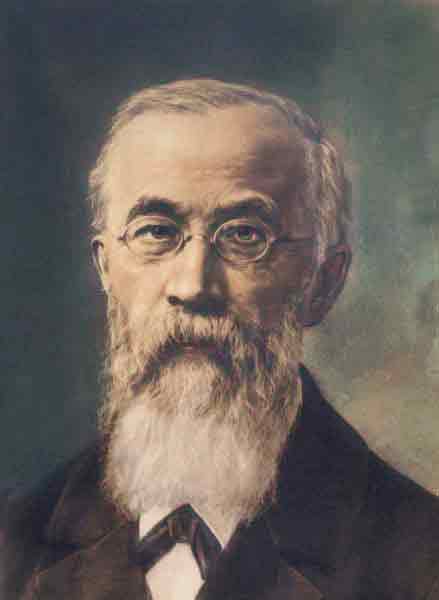
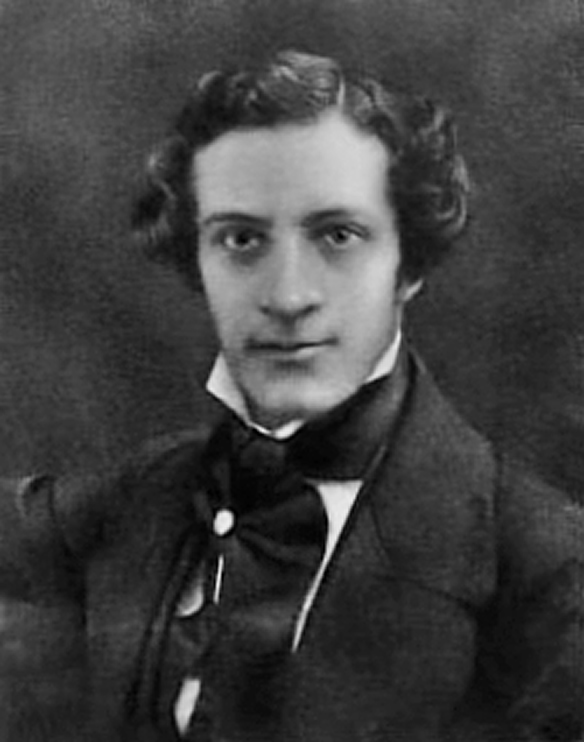
William Harvey (1578–1657) – The Discoverer of Blood Circulation
Life and Education
William Harvey was born in 1578 in Folkestone, Kent, England. He studied at Gonville and Caius College, University of Cambridge, and later went to Italy to study at the University of Padua, then the leading medical center in Europe. There, he was a student of Professor Hieronymus Fabricius, who had discovered the venous valves but had not yet fully understood their function.
After earning his Doctor of Medicine degree in 1602, Harvey returned to England, where he became physician to King James I and King Charles I. He also taught at St. Bartholomew’s Hospital and the Royal College of Physicians in London.
The Great Discovery of Blood Circulation
In Harvey’s time, European medicine still followed the theory of Galen (2nd century), which held that blood was produced in the liver, flowed through the veins to the organs, and was then consumed there, without circulating. Harvey refuted this entire theory through experimentation.
Through anatomical observation, animal experiments, and quantitative calculation, he demonstrated that the heart is a mechanical pump that drives blood through a closed circuit. Blood flows from the heart through the arteries to the tissues, and then returns to the heart through the veins. The amount of blood pumped by the heart each minute was far too great to be consumed in the way Galen had described.
In 1628, he published his famous work De Motu Cordis (On the Motion of the Heart and Blood in Animals), consisting of 17 chapters that described in detail the structure of the heart, the opening and closing of the heart valves, and the circulation of blood through the body.
A Pioneering Scientific Method
Harvey stood out not only for his conclusions, but also for his method. He directly observed biological phenomena, performed repeated experiments, used animals to observe the beating heart, and measured the amount of blood pumped with each heartbeat—an approach that was revolutionary for his time.
He once said:
“I do not believe anything until I can see it with my own eyes and prove it by reason.”
Impact and Scientific Legacy
William Harvey’s discovery transformed the whole of medicine:
- It laid the foundation for circulatory physiology and cardiology.
- It influenced later scientists such as Malpighi (the discoverer of the capillaries), Boyle, Newton, and Haller.
- It advanced the scientific method based on observation, measurement, and experiment.
- It created the basis for modern medicine, opening the way for research on blood pressure, oxygenation, and cardiovascular biology.
Final Years and Honors
Harvey died in 1657 in Roehampton, London, at the age of 79, and was buried at Hempstead Church in England. Today, his name is carried by many universities, medical institutions, and scientific awards, including the William Harvey Research Institute at Queen Mary University of London.
His statues and portraits are displayed in many major medical museums around the world, symbolizing the intelligence and spirit of enlightenment of humanity.
Conclusion
William Harvey stands as a testament to the power of scientific thought and perseverance in discovery. With De Motu Cordis, he changed the way humanity understood life, moving medicine from myth toward evidence-based science. As Sir Francis Bacon once remarked:
“Harvey made the heart no longer merely a symbol of emotion, but the center of life.”


Other Posts