

.jpg)
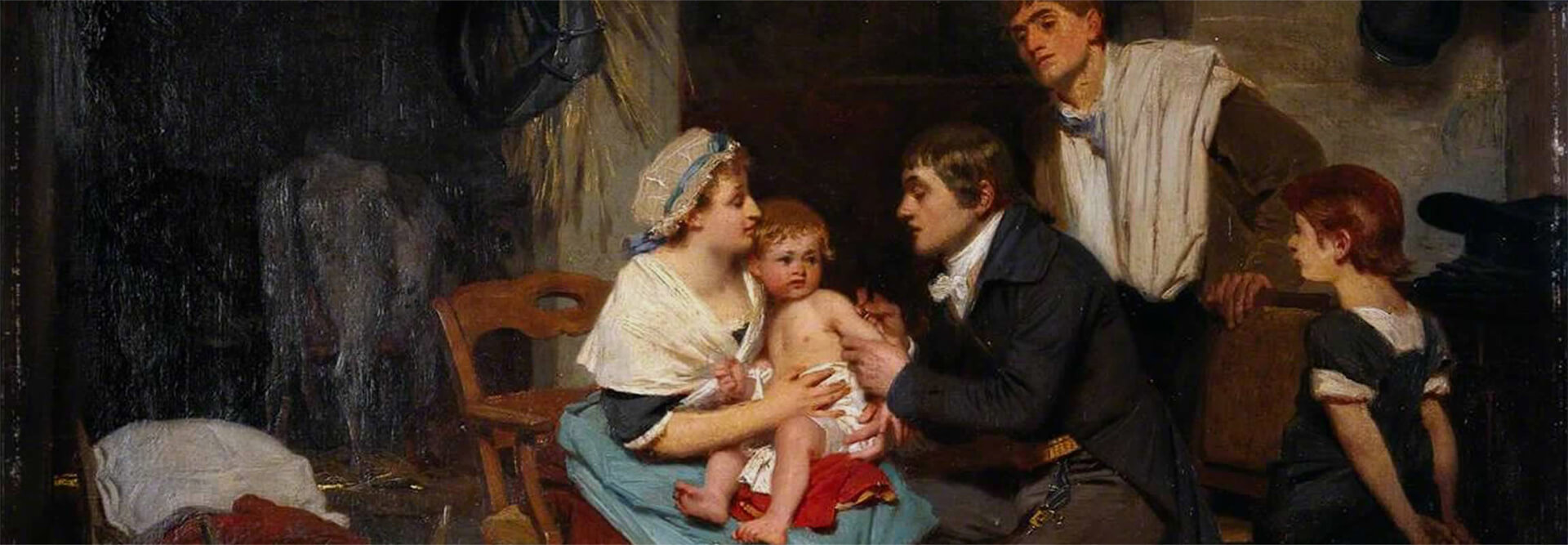
Edward Jenner and the Smallpox Vaccine
Today, vaccination is the most effective method of disease prevention, saving billions of lives from dangerous epidemics. The person who laid the foundation for this great achievement was Edward Jenner (1749–1823), an English physician widely regarded as the father of vaccination.
In the late 18th century, when smallpox was raging across Europe, causing high mortality and leaving severe complications, Jenner observed that milkmaids who had previously contracted cowpox seemed not to develop smallpox. From this, he came up with the idea of using the weakened cowpox virus to inoculate people and create immunity against smallpox.
In 1796, Jenner conducted his first experiment on an eight-year-old boy named James Phipps. After recovering from cowpox, the boy was later inoculated with the smallpox virus but did not develop the disease. This revolutionary discovery was published in 1798 in his scientific work, “An Inquiry into the Causes and Effects of the Variolae Vaccinae.”
His method was quickly adopted around the world. The governments of Britain, France, the United States, and many other countries implemented it on a large scale. The success of the smallpox vaccine not only saved millions of lives but also ushered in the era of preventive medicine, ultimately contributing to the global eradication of smallpox in 1980.
Edward Jenner was honored in many countries, and monuments to him were erected in England, France, Italy, and elsewhere. He died in 1823 and was buried at Westminster Abbey, the resting place of many of the world’s great figures.
Edward Jenner—the immortal physician who laid the foundation for modern medicine—left behind a priceless medical legacy that continues to protect human health worldwide.


Other Posts