

.jpg)
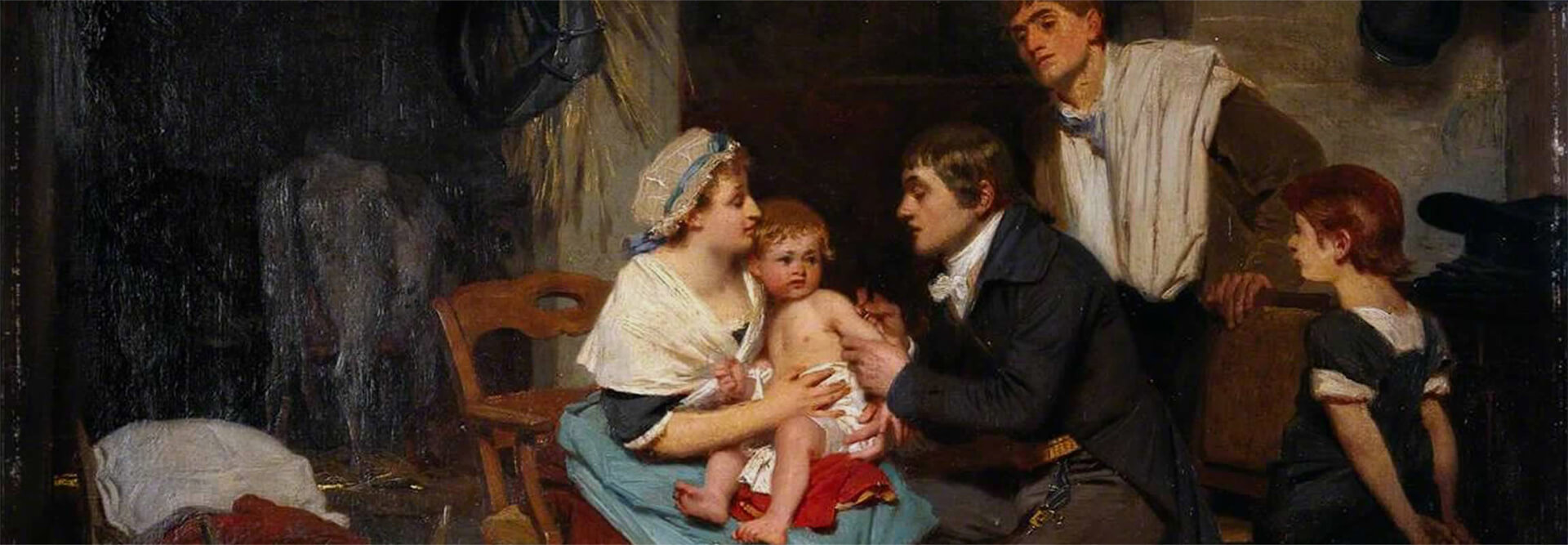
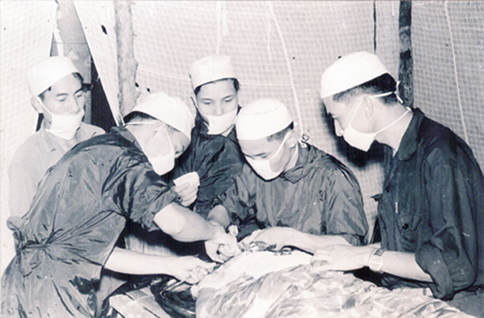
Surgery performed in underground shelters during wartime, without anesthesia.
Throughout the surgery, the patient cried out continuously and, because of the unbearable pain, fainted several times. At times, the patient refused to undergo surgery without anesthesia, but after understanding the situation, he realized that there was no other choice.
On Võ Hoàng Lê’s body were the scars of a battle-hardened soldier. He had been wounded six times during his 43 years of military service, including twice during the resistance war against the French and four times during the war against the Americans. For him, 1967 was not a fortunate year. During an air raid, he suffered napalm burns to his right elbow. Later, in a ground attack, shrapnel from an M-79 grenade launcher struck the upper part of his left arm. Then, during an artillery attack, several fragments lodged in his back when a shell exploded too close to him.
But the most terrible wound Võ Hoàng Lê suffered came the following year. A bullet from an M-60 machine gun pierced his hand, severing part of his palm and little finger. When he arrived for treatment, the nurse hesitated to cut away the lower part of his hand, which was left dangling. So he pulled a knife from his pocket and, without any anesthetic, cut off the part of the hand that had become useless.
Wresting Life from Beneath the Ground
The Võ Hoàng Lê mentioned above was not an infantry soldier on the front line; he was a surgeon. He was interviewed by James G. Zumwalt, a former lieutenant colonel in the U.S. Marine Corps during the Vietnam War, in the book Bare Feet, Iron Will. The author called him “the doctor of pain.”
During 15 years of service in southern Vietnam, Dr. Võ Hoàng Lê worked mainly in Củ Chi. The intense campaign of spraying dioxin conducted by the Americans in this area forced his hospital to move underground. He recalled:
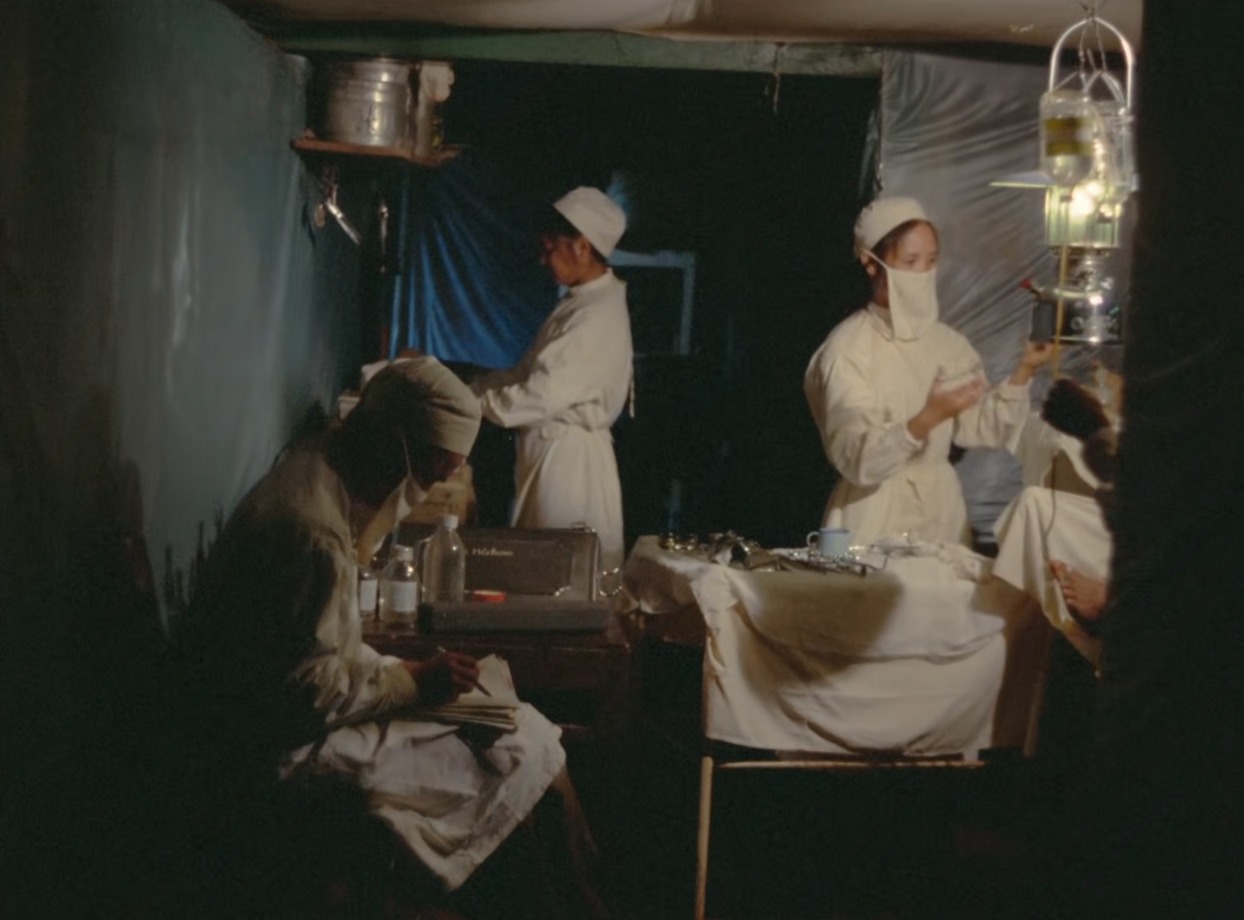
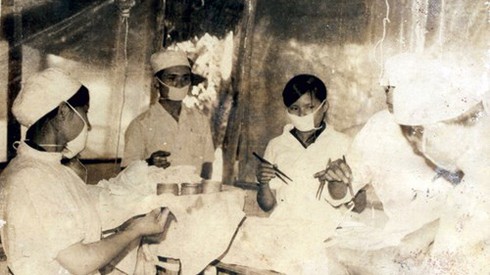
“We dug rooms about three to four meters below the ground, then installed supporting beams and ceiling panels, covered them with soil, and camouflaged them with bushes. The different sections of the hospital were connected by tunnels. The operating room was large enough to accommodate one doctor, one assistant, surgical equipment, an anesthesiologist, and a nurse.
Sometimes, for major operations such as stomach surgery, we needed two assistants, so there were six people in the room altogether. A generator provided lighting for surgery, but when the noise of the generator could expose our position, we used flashlights attached to our helmets to operate.
We often had no anesthesia. In such cases, we used Novocain, a local anesthetic used in dentistry, for minor surgeries. For major operations, we injected Novocain into the spine or into the spinal canal. The patient remained awake but felt no pain.
However, even Novocain was in short supply, and we were forced to dilute it. When this happened, I informed the patient in advance that there was only enough Novocain to numb the internal organs, not enough to numb the skin where we would make the first incision. Stomach surgeries were performed in this way.
In many cases, we lacked both anesthesia and Novocain, but because the patient’s condition was critical, surgery could not be delayed. A soldier might be severely wounded, with the injury already badly infected, decaying, and requiring immediate amputation of a limb without any anesthetic at all.
After informing the patient, we explained that if surgery was not performed immediately, the infection would spread and could lead to death. It was extremely difficult for both the doctor and the patient, but there was no other choice. We had to carry it out.
If an arm had to be amputated, we tied a tourniquet above the point of amputation and then used a knife to cut through the flesh. Once the cut reached the bone, we used a saw. We tried to complete the amputation within 15 minutes.
Throughout the surgery, the patient cried out continuously and, because of the unbearable pain, fainted several times. At times, the patient refused to undergo surgery without anesthesia, but after understanding the situation, he realized that there was no other choice. It was a struggle between life and death.”


Other Posts