

.jpg)

Of the Epidemics – The Essence of Hippocrates’ Evidence-Based Medicine
1. Introduction
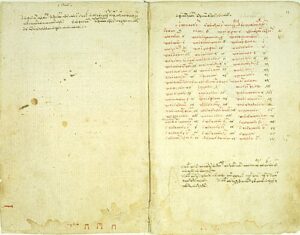
Of the Epidemics (Greek: Ἐπιδημιῶν – Epidemion), or “On Epidemics,” is a well-known medical treatise compiled by Hippocrates, the ancient Greek physician who lived around 460–370 BC. The work forms part of the Hippocratic Corpus (Corpus Hippocraticum) and is regarded as one of the foundations of Western medicine.
Unlike earlier records that were shaped by mythological explanations, Of the Epidemics clearly reflects an approach based on observation, analysis, and evidence-based reasoning. It marked a turning point from religious medicine toward scientific medicine.

2. Historical Context and Origins
The work was written around the 5th century BC, during the period when Hippocrates practiced and taught medicine on the island of Kos, Greece. At that time, the concept of “epidemics” (epidemiai) did not refer only to infectious diseases, but also described patterns of illness that recurred according to season or region.
The text is divided into seven books (Books I–VII), most of which are believed to have been recorded by Hippocrates and his students.
3. Structure and Main Content
Each book in Of the Epidemics consists of three main parts:
- Observations of climate and environment;
- Clinical case records, including symptoms, disease progression, and treatment outcomes;
- Comments and conclusions drawn from real cases.
For example, in Book I, Hippocrates recorded 42 patient cases with symptoms such as pneumonia, high fever, and convulsions. He described in detail temperature, skin color, pulse, urine, sleep, and prognostic signs, demonstrating a scientific and humane method of observation.
4. Scientific Value and Contributions to Medicine
Of the Epidemics marked a turning point in the history of medicine for the following reasons:
- It laid the foundation for evidence-based medicine, describing the course of disease systematically and without reference to divine causes.
- It introduced the case study method, treating each patient as a source of learning.
- It helped give rise to the field of epidemiology, as Hippocrates recognized the relationship between climate, water, environment, and disease.
- It emphasized medical ethics and reason in practice, highlighting the physician’s role in observing and explaining natural phenomena.
5. Influence and Legacy
The ideas in Of the Epidemics profoundly influenced European medicine for more than two millennia. Roman physicians such as Galen continued to develop Hippocrates’ method of observation and explanation, and during the Renaissance, the work became a source of inspiration for modern experimental medicine.
The terms “epidemic” and “epidemiology” in medicine today both originate directly from this treatise, reflecting Hippocrates’ lasting influence on scientific thinking and medical education.
6. Conclusion
Of the Epidemics is not only an ancient medical work but also a declaration of the scientific and humanistic spirit in medicine. Through each clinical case, Hippocrates demonstrated that medicine is the art of observation and understanding, not blind belief. The work stands as evidence of the beginning of modern medicine—where reason, experience, and compassion come together to serve humanity.


Other Posts