

.jpg)
Global Medical Pioneer (4): Hippocrates, the Father of Western Medicine.
Hippocrates of Kos was a Greek physician who lived from around 460 BC to 375 BC, at a time when most people treated illness through superstition and believed that disease was caused by the wrath of the gods. Hippocrates taught that all forms of disease had natural causes. He established the first school dedicated to teaching the practice of medicine. For this reason, he is widely known as the “Father of Medicine.”
Around 60 medical writings are associated with his name, including the famous Hippocratic Oath, which has survived to this day. These writings were eventually collected into a body of work known as the Hippocratic Corpus. Although Hippocrates may not have written all of these medical texts himself, the writings reflect his medical philosophy. Through the example of Hippocrates, medical practice was guided in a new direction—one that moved toward a more rational and scientific view of medicine.
The Four Humors
Hippocrates is often credited with developing the theory of the four humors, or bodily fluids. The philosophers Aristotle and Galen also contributed to this concept. Centuries later, William Shakespeare incorporated these humors into his works when describing human qualities.
According to “The World of Shakespeare’s Humors,” an exhibition by the National Institutes of Health (NIH), the humors were associated with yellow bile, black bile, blood, and phlegm. Each humor was linked to a specific element—earth, water, air, or fire—two qualities—cold, hot, moist, or dry—certain body parts, and particular stages of life: childhood, adolescence, adulthood, and old age.
The interaction among the humors, qualities, organs, and ages, as well as the influence of seasons and planets, was believed to determine a person’s physical and mental health, as well as their temperament or personality.
According to the theory:
Yellow bile was associated with a choleric temperament and the qualities of hot and dry. It was linked to fire, summer, the gallbladder, and childhood.
Black bile was associated with a melancholic temperament and the qualities of cold and dry. It was linked to earth, winter, the spleen, and old age.
Blood was associated with a sanguine temperament and the qualities of hot and moist. It was linked to air, spring, the heart, and adolescence.
Phlegm was associated with a phlegmatic temperament and the qualities of cold and moist. It was linked to water, the brain, and adulthood.
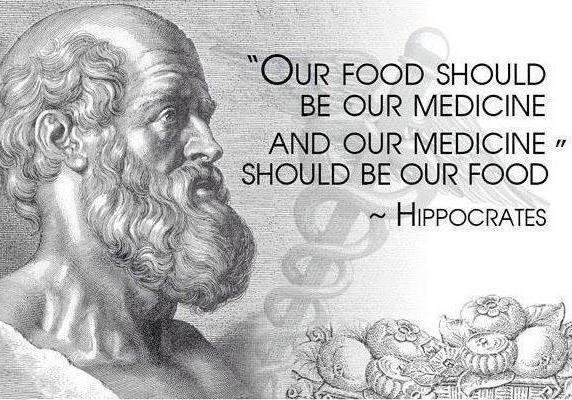
According to this ancient theory, the key to good health was maintaining a balance among the humors. An excess or deficiency of one or more humors was believed to be associated with illness. Food was considered one of the most important ways to help balance the proportions of these humors. In fact, one of the most famous sayings attributed to Hippocrates is: “Let food be thy medicine and medicine be thy food.”
Hippocratic Corpus
The Hippocratic Corpus is considered the oldest collection of medical documents. It is a collection of around 60 texts, or “books,” containing lectures, textbooks, research, case studies, and philosophical essays on a wide range of topics related to medicine. Some works are brief, only about the length of a paragraph, while others consist of several volumes.
The different writing styles found throughout the collection suggest that the ideas in the corpus came from several authors. Historians believe that the texts may have been written by many physicians who practiced medicine during Hippocrates’ lifetime and in later periods.
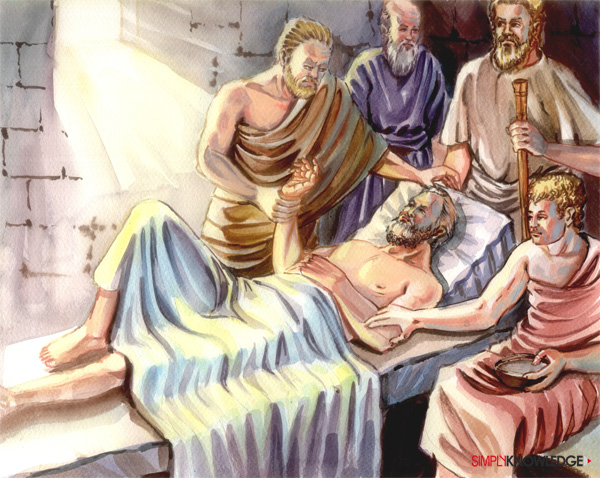
His writings were eventually collected in Alexandria, Egypt, in the third century BC, and ultimately became standard reference materials for physicians throughout the Western world. Many of the teachings remained in use well into the 19th century.
The Hippocratic Oath
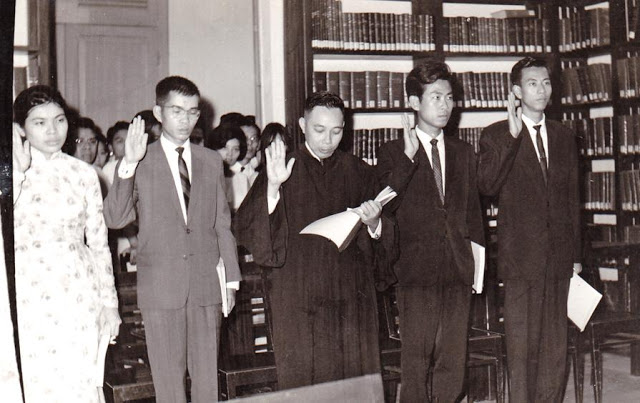
The Hippocratic Oath, found within the Corpus Hippocraticum, is an ancient code of ethics for physicians. While attributed to Hippocrates, it remains unclear whether he personally authored it. Today, the Oath is regarded more as a historical landmark of medical principles and ethics rather than a strictly literal legal obligation.
In the original version, physicians swore by the Greek gods and goddesses of health to practice medicine to the best of their ability.
Modern medical graduates still recite updated variations of the Oath. Below is a widely recognized modern version written in 1964 by Dr. Louis Lasagna, former Academic Dean of the School of Medicine at Tufts University:
The Hippocratic Oath (Modern Version)
-
I swear to fulfill, to the best of my ability and judgment, this covenant:
-
I will respect the hard-won scientific gains of those physicians in whose steps I walk, and gladly share such knowledge as is mine with those who are to follow.
-
I will apply, for the benefit of the sick, all measures which are required, avoiding those twin traps of overtreatment and therapeutic nihilism.
-
I will remember that there is art to medicine as well as science, and that warmth, sympathy, and understanding may outweigh the surgeon's knife or the chemist's drug.
-
I will not be ashamed to say "I know not," nor will I fail to call in my colleagues when the skills of another are needed for a patient's recovery.
-
I will respect the privacy of my patients, for their problems are not disclosed to me that the world may know. Most especially must I tread with care in matters of life and death. If it is given me to save a life, all thanks. But it may also be within my power to take a life; this awesome responsibility must be faced with great humbleness and awareness of my own frailty. Above all, I must not play at God.
-
I will remember that I do not treat a fever chart, or a cancerous growth, but a sick human being, whose illness may affect the person's family and economic stability. My responsibility includes these related problems, if I am to care adequately for the sick.
-
I will prevent disease whenever I can, for prevention is preferable to cure.
-
I will remember that I remain a member of society, with special obligations to all my fellow human beings, those sound of mind and body as well as the infirm.
-
If I do not violate this oath, may I enjoy life and art, respected while I live and cherished with affection thereafter. May I always act so as to preserve the finest traditions of my calling and may I long experience the joy of healing those who seek my help.
Modern Perspective
Many contemporary physicians believe the Oath is insufficient to address today's complex economic, political, and social challenges—such as legal abortion, physician-assisted suicide, and other practices non-existent in the Hippocratic era.
Nevertheless, doctors uphold its core tenets: treating the sick to the best of one's ability, protecting them from harm and injustice, safeguarding patient privacy, and transmitting medical knowledge to the next generation.


Other Posts