

.jpg)

Xeroderma Pigmentosum (XP)
Xeroderma Pigmentosum (XP) is a rare autosomal recessive genetic disorder characterized by an extreme sensitivity to ultraviolet (UV) radiation from sunlight. Patients lack the ability to repair UV-induced DNA damage, resulting in a risk of developing skin cancer that is 10,000 times higher than that of the general population. XP patients are colloquially known as "Moon Children" because they can safely venture outdoors only at night.
.jpg)
1. Epidemiology and Genetic Etiology
-
Incidence: The disorder affects approximately 1 in 250,000 individuals in Europe and North America, but exhibits a significantly higher incidence in regions such as Japan (1 in 20,000), North Africa, and the Middle East due to higher rates of consanguinity.
-
Molecular Pathogenesis (NER Impairment):
-
In healthy individuals, the Nucleotide Excision Repair (NER) pathway detects and removes UV-induced DNA lesions, such as pyrimidine dimers.
-
In XP patients, mutations in one of the genes involved in the NER machinery (XPA, XPB/ERCC3, XPC, XPD/ERCC2, XPE/DDB2, XPF/ERCC4, XPG/ERCC5) or the variant gene XP-V (POLH) disable this repair mechanism.
-
Unrepaired DNA damage accumulates rapidly following sun exposure, leading to widespread genomic mutations and accelerated carcinogenesis.
-
2. Clinical Manifestations
Clinical symptoms of XP manifest early in life, typically before age 2, primary affecting the skin, eyes, and nervous system.
Cutaneous Features
-
Severe Sunburns: After just a few minutes of sun exposure, infants develop severe blistering, erythema, and painful burns that require weeks to heal.
-
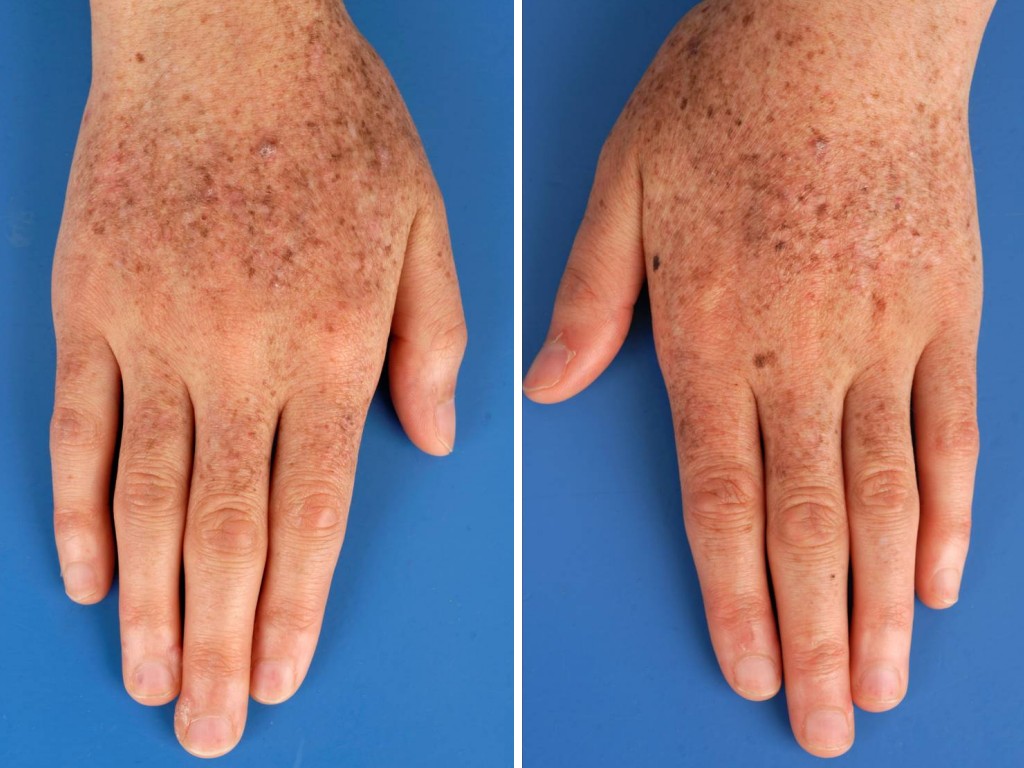
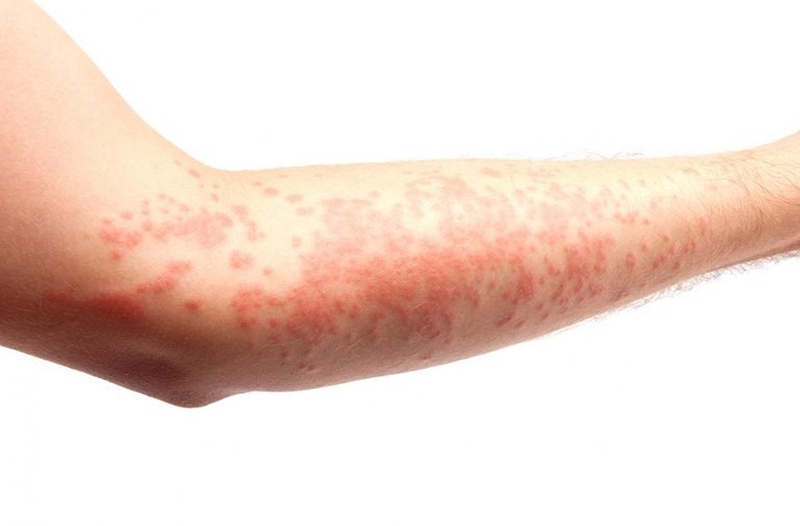
Pigmentary Changes: Widespread development of freckle-like macules, hyperpigmentation intermingled with hypopigmented spots (poikiloderma), appearing predominantly on sun-exposed areas (face, neck, arms).
-
Skin Atrophy & Xerosis: Over time, the skin becomes dry, rough, scaly, and progressively atrophic.
Ocular Features
-
Photophobia: Extreme light sensitivity causing constant ocular pain and lacrimation.
-
Inflammatory Changes: Chronic conjunctivitis, dry eye syndrome, ectropion (eyelid turning outward), corneal opacification, and symblepharon.
-
Ocular Malignancies: High risk of developing neoplasms on the cornea, conjunctiva, and eyelids at a very young age.
Neurological Complications (25% of Patients)
Observed in specific complementation groups such as XPA, XPB, XPD, and XPG (De Sanctis-Cacchione syndrome):
-
Progressive sensorineural hearing loss.
-
Ataxia, hyporeflexia/areflexia, spasticity, microcephaly, and progressive cerebral atrophy.
3. Skin Cancer Risk
-
Age of Onset: The median age for developing the first non-melanoma skin cancer in XP patients is 8 years old (compared to 60 years old in the general population).
-
Common Malignancies: Squamous Cell Carcinoma (SCC), Basal Cell Carcinoma (BCC), and Melanoma.
-
Mortality: Invasive skin cancers and progressive neurological degeneration are the primary causes of death before age 30 if strict photoprotection is not maintained.
4. Diagnosis
-
Clinical Evaluation: Based on early severe sunburn history, extensive freckling/poikiloderma, and extreme photophobia.
-
Functional Repair Assay: Measurement of Unscheduled DNA Synthesis (UDS) levels in cultured skin fibroblasts exposed to UV light.
-
Genetic Testing: Next-Generation Sequencing (NGS) to identify the specific mutated gene (XPA through XPG, or XP-V) for prognosis and prenatal genetic counseling.
5. Clinical Management and Prevention
There is currently no cure for the underlying genetic mutations; primary management revolves around absolute UV protection and early oncological intervention:
-
24/7 UV Photoprotection:
-
Wearing full-coverage UV-protective clothing, UV400-blocking sunglasses, and wide-brimmed hats with face shields.
-
Applying broad-spectrum sunscreen (SPF 50+, PA++++) every 2 hours.
-
Installing UV-blocking window films in homes, schools, and vehicles; replacing fluorescent/incandescent lighting with non-UV LED bulbs indoors.
-
-
Routine Dermatological Surveillance: Full-body skin examinations every 3 to 6 months to detect and surgically excise precancerous lesions or early-stage carcinomas.
-
Supportive Medical Therapy:
-
Oral retinoids (e.g., Acitretin, Isotretinoin) to suppress the formation of new cutaneous neoplasms.
-
High-dose Vitamin D supplementation (as patients cannot endogenously synthesize Vitamin D via sunlight).
-


Other Posts
.jpg)