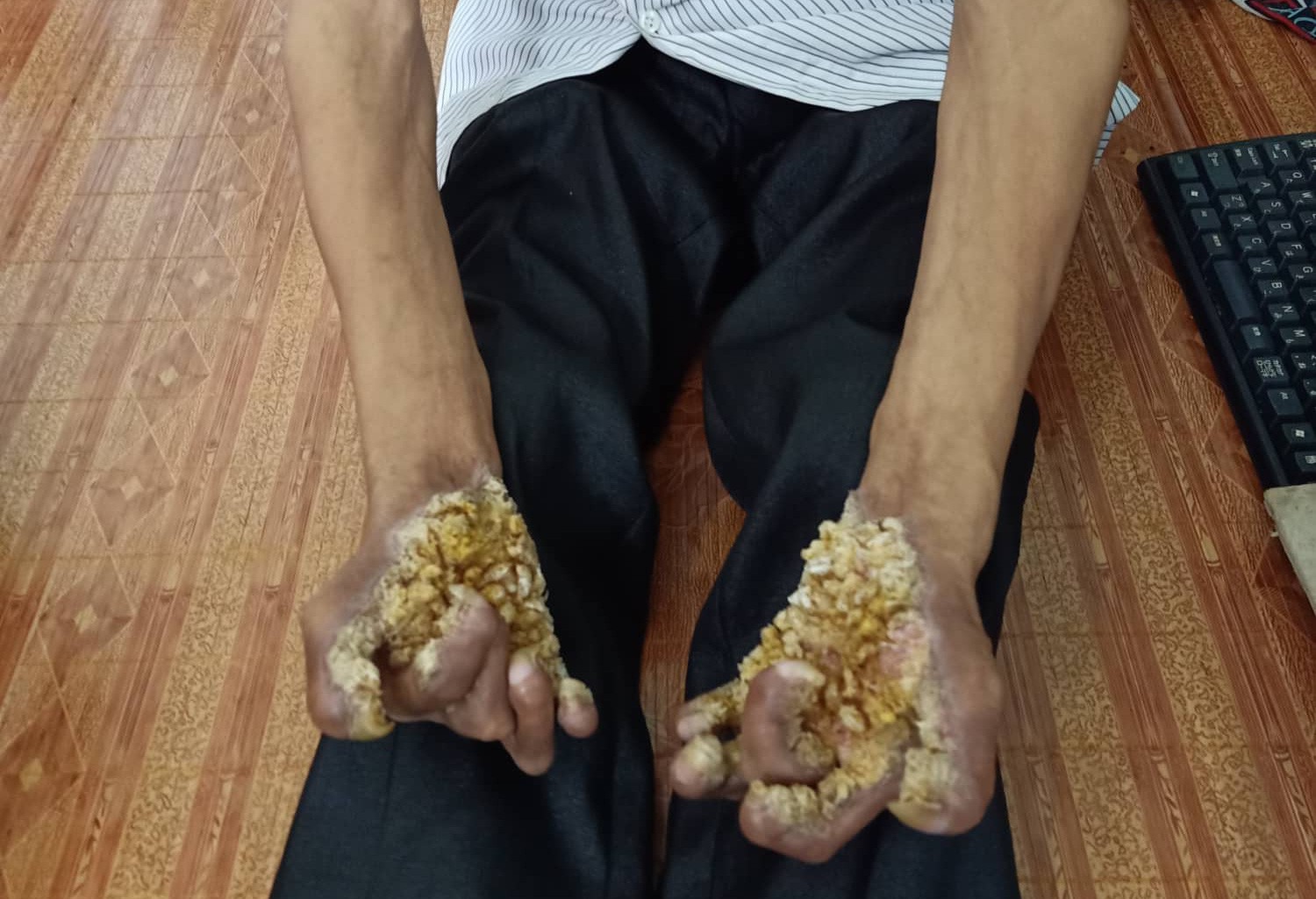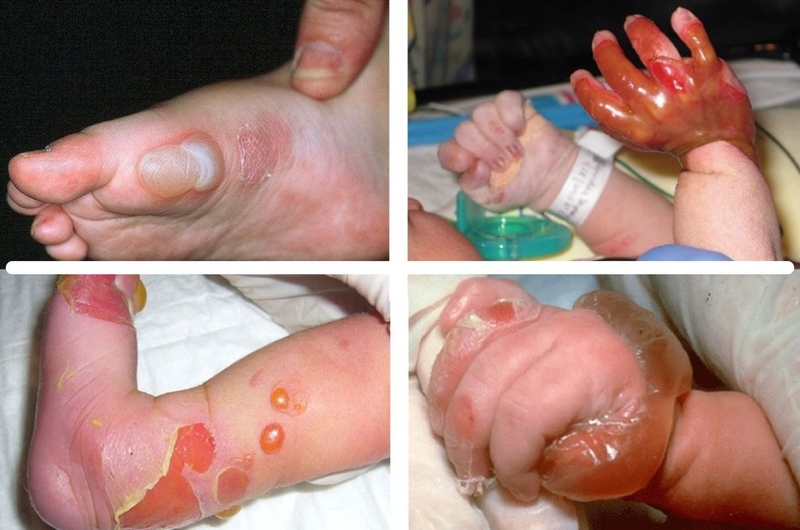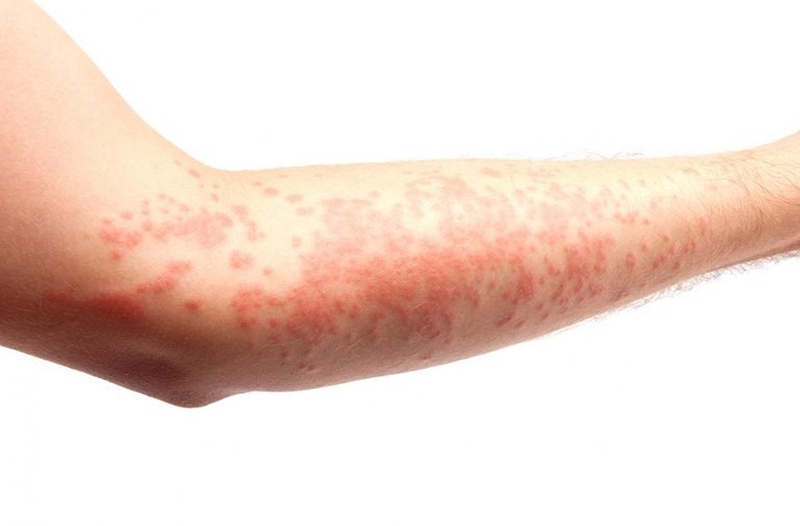


.jpg)

Pyoderma Gangrenosum (PG)
Pyoderma Gangrenosum (PG) is a rare autoinflammatory ulcerative skin disease characterized by the rapid onset of painful, necrotizing skin lesions that quickly progress into deep ulcers with violaceous, undercut borders.
Despite its name containing "Pyoderma" (pus-producing skin infection) and "Gangrenosum" (gangrene/necrosis), this condition is neither a direct infectious process nor a primary vascular ischemic gangrene.
.jpg)
.jpg)
1. Epidemiology and Etiology
-
Incidence: Extremely rare, estimated at approximately 3–10 cases per million people per year.
-
Age Distribution: Most commonly affects adults aged 40–60 years, although it can present at any age.
-
Pathogenesis: The exact mechanism remains incompletely understood, but it is considered a disorder of innate immune dysregulation, characterized predominantly by neutrophil hyperreactivity and infiltration, leading to tissue damage and necrosis in the skin.
Systemic Associations
Approximately 50%–70% of Pyoderma Gangrenosum cases are associated with an underlying systemic disease:
-
Inflammatory Bowel Disease (IBD): Crohn's disease or Ulcerative Colitis (UC).
-
Arthropathies: Rheumatoid arthritis (RA), psoriatic arthritis, ankylosing spondylitis.
-
Hematologic Disorders: Multiple myeloma, Myelodysplastic Syndrome (MDS), acute leukemia.
-
Autoinflammatory Syndromes: PAPA syndrome (Pyogenic Arthritis, Pyoderma gangrenosum, and Acne), PASH syndrome, etc.
2. Clinical Features and Variants
Pathergy Phenomenon
Pathergy is a defining clinical hallmark of PG: lesions develop or rapidly exacerbate following minor cutaneous trauma, such as needle sticks, surgical incisions, skin grafting, or minor abrasions.
Clinical Variants
-
Ulcerative (Classic) Variant:
-
Characteristics: Begins as a pustule, nodule, or erythematous papule that rapidly breaks down into a deep, tender ulceration with a raised, violaceous, undermined border and a purulent, necrotic base. Accompanied by severe pain.
-
Common Sites: Lower extremities, perianal and genital regions.
-
-
Pustular Variant:
-
Characteristics: Presents with multiple sterile pustules on an erythematous base, frequently accompanied by fever and arthralgias.
-
Common Sites: Extensor surfaces of extremities; highly associated with active IBD.
-
-
Bullous (Atypical) Variant:
-
Characteristics: Rapid development of painful bullae that erode into superficial ulcerations.
-
Common Sites: Face and upper limbs; strongly associated with underlying hematologic malignancies.
-
-
Vegetative (Granulomatous) Variant:
-
Characteristics: Characterized by superficial, indolent, non-tender exophytic or verrucous ulcers that progress slowly.
-
Common Sites: Head, neck, and trunk.
-
-
Peristomal Variant:
-
Characteristics: Distinct painful ulcerations arising adjacent to stoma sites.
-
Common Sites: Abdominal skin surrounding colostomies or ileostomies.
-
3. Diagnosis
Pyoderma Gangrenosum remains a diagnosis of exclusion, as there are no specific biological markers or definitive histopathological criteria.
-
Skin Biopsy: Performed primarily to exclude differential diagnoses (e.g., vasculitis, infectious ulcers, malignancy). Histology classically reveals dense dermal neutrophilic infiltration without evidence of primary necrotizing vasculitis.
-
Microbiological Workup: Wound cultures (bacterial, fungal, mycobacterial) are characteristically negative in early, uninfected lesions.
-
Systemic Screening: Full blood counts, bone marrow evaluation, GI endoscopy, rheumatoid factor (RF), and ANA testing are indicated to evaluate for underlying systemic conditions.
4. Treatment Protocols
The primary goals of treatment are to suppress the inflammatory cascade, control pain, and promote wound healing.
Principles of Wound Care (Critical)
-
AVOID AGGRESSIVE DEBRIDEMENT: Surgical or mechanical debridement triggers the pathergy phenomenon, leading to rapid ulcer enlargement.
-
Use non-adherent moist dressings, gentle cleansing with normal saline, and adequate topical barrier protection.
Systemic and Medical Management
-
Topical/Local Therapy (For mild or localized disease):
-
High-potency topical corticosteroids (e.g., Clobetasol) or Tacrolimus 0.1% ointment.
-
Intralesional corticosteroid injections (Triamcinolone) into the active violaceous border.
-
-
Systemic Therapy (For extensive or rapidly progressive disease):
-
Systemic Corticosteroids: Oral Prednisone ($0.5 - 1.5 ext{ mg/kg/day}$) serves as first-line therapy to rapidly halt disease progression.
-
Immunosuppressants: Cyclosporine, Mycophenolate Mofetil, Azathioprine, or Methotrexate are often co-prescribed as steroid-sparing agents.
-
Biologic Therapies: Anti-TNF-alpha agents (Infliximab, Adalimumab) have demonstrated high efficacy, particularly in patients with co-existing Inflammatory Bowel Disease.
-
-
Management of Underlying Disease: Optimizing control of underlying IBD, arthritis, or hematologic conditions is essential for achieving long-term dermatologic remission.


Other Posts
.jpg)